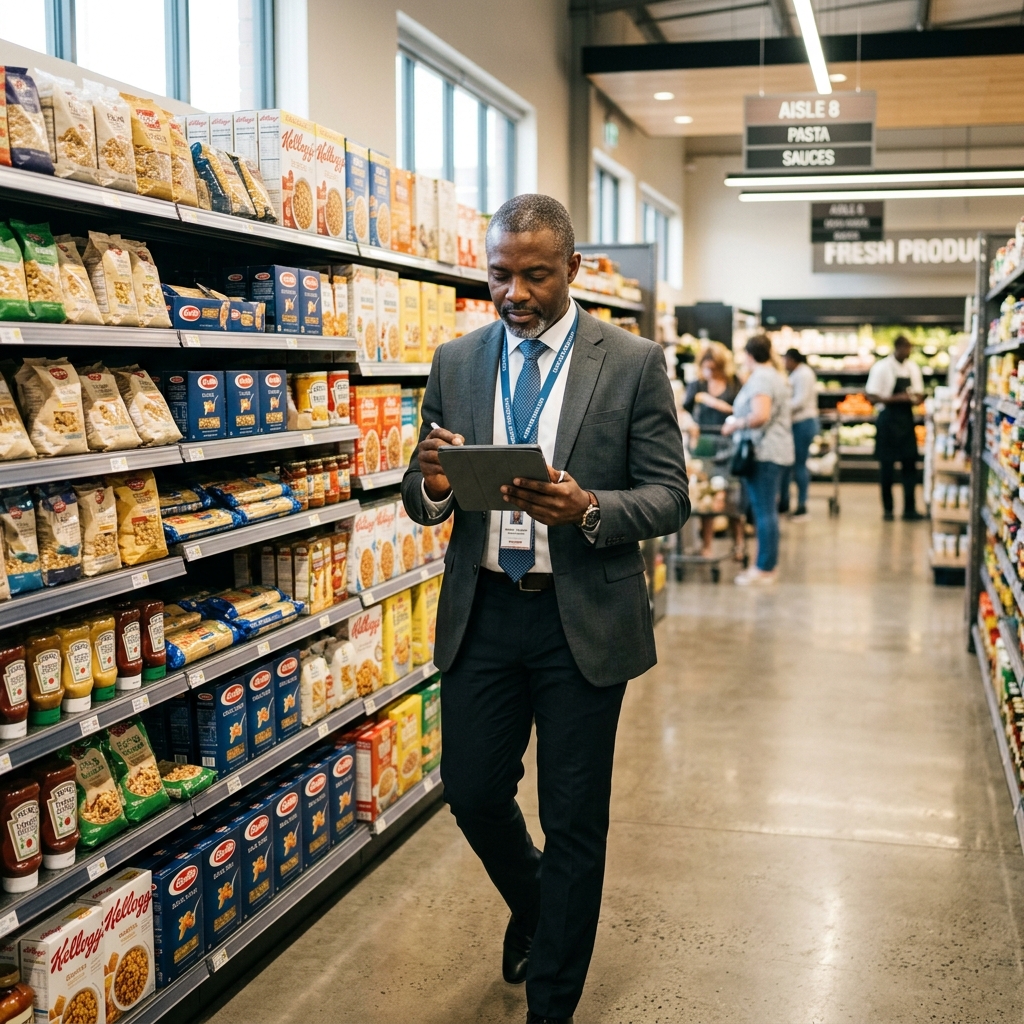
In high-volume retail operations, cash flow leaks are rarely caused by a single catastrophic error. Instead, they occur slowly through thousands of minor stock mismatches. The most expensive leak is the **stock-out**—a customer wants to buy a specific item, finds the shelf empty, and either walks away or purchases a competitor's alternative.
Traditional supermarkets manage inventory by counting stock manually at the end of the week or month. But by the time a manager notices that a popular brand of milk or soap is out of stock, they have already lost days of sales revenue.
To prevent stock-outs without over-ordering and tying up capital in slow-moving items, supermarkets must calculate and monitor **SKU Velocity** in real time.
What is SKU Velocity?
SKU (Stock Keeping Unit) Velocity measures how fast a specific item is scanned and sold at checkout over a defined time window. It is not just a daily average. It is a dynamic hourly rate.
By analyzing SKU velocity, managers can spot detailed consumer demand trends:
- Peak Hours: Identifying which items sell fastest on Friday evenings versus Monday mornings.
- Reorder Alert Thresholds: Setting dynamic alerts that notify inventory managers to restock shelves when sales rate outpaces inventory balance.
- Product Affinity: Spotting which items are purchased together (e.g. buying seasoning cubes whenever a customer buys rice).
"Having high inventory is not a sign of a healthy store. Real retail health is about high velocity—moving stock off the shelves and converting it to cash flows instantly."
Leveraging Line-Item Data
Historically, card terminals and bank transfer payments only recorded transaction amount totals (e.g., ₦18,420). They provided zero visibility into *what* the customer purchased.
Because Buypass intercepts transaction receipt streams directly from the POS printer stream, our platform captures full structured line-item data. Every item description, quantity, and unit price is immediately aggregated and processed.
This allows the Buypass Merchant Dashboard to calculate SKU velocity automatically. Managers no longer need to run complex database exports. They can view velocity graphs, identify trending items, and spot inventory depletion alerts in real time.
Reducing Working Capital Costs
Calculating SKU velocity helps supermarkets optimize their working capital. By reducing order quantities for slow-selling inventory and increasing order quantities for high-velocity SKUs, stores can:
- Reduce cash tied up in dead stock storage.
- Increase inventory turnover rates.
- Build stronger distributor relationships through predictable, data-driven order cycles.
In modern retail, data is the difference between thriving and surviving. By turning everyday receipt print streams into actionable SKU velocity intelligence, Buypass is helping Nigerian supermarkets optimize their operations and protect their profit margins.
Ngozi Adesanya
Head of Merchant SuccessNgozi spent eight years consulting for major retail brands in West Africa. She assists supermarkets on the Buypass network in leveraging dashboard analytics to improve supply chains and store sales.